
How Logan County Busted Mugshots Begin
Every Logan County busted mugshot traces back to a single moment: someone walks through the doors of the Logan County Detention Center after an arrest. The arresting officer writes up an incident report. From there, jail staff take over. They confirm the person's identity, key in the booking data, and open a file. The county's own job application for deputy jailers spells out the photo duties: snap the mugshot, move it to a computer, enter the details, and file it away. So the images do get made. That said, the county has never promised that every photo lands on its public web roster.
The file keeps moving after booking day. Bond gets set. People get released, transferred, or held on a detainer. Arraignment and everything that follows lives in the court file, not the jail file. Those events carry different dates and sit with different custodians.
Several agencies feed the same jail. Russellville Police, Auburn Police, Adairville Police, the Logan County Sheriff's Office, and Kentucky State Police all make arrests that end at the detention center. Each one keeps its own paperwork. The arresting department holds the event and investigation records. The detention center holds the intake file, the booking details, and the photo. This split matters when you want records. A request for the officer's narrative goes to the arresting agency. A request for the mugshot or custody entry goes to the jail. Send each one to the right office, scoped tightly, and you avoid a denial over custodian confusion alone.
Timing adds another wrinkle. Staff can snap and file a photo during intake while the public JailTracker screen is still processing the entry or simply not showing the picture. No posting deadline exists. Note the exact time you searched, keep the official URL, and treat a blank photo box as just that: a blank box.
Fields in a Logan County Booking Record
The official detention-center page states plainly what its Current Inmates listing carries: bond, charge, and court dates. The live JailTracker client may show other labels too. Read them off the current screen. Assume nothing based on how another county's system works.
| Field | What it means |
|---|---|
| Name and custody status | The identity and current-inmate label shown by the portal, if displayed. |
| Booking number | An intake identifier may display, but Logan County does not publish a fixed format. |
| Booking date or time | An intake date may display in the live client or can be requested from the custodian. |
| Arresting agency | The police, sheriff, KSP, or other agency that made the arrest, if shown. |
| Charge | The alleged offense entered at booking. |
| Bond | The bond information then attached to the custody record. |
| Court date | A scheduled court event, not the final disposition. |
| Release or bond-out status | A custody change may be shown, but the roster is not a complete release history. |
| Booking photo | The jail creates an image, but public display is variable and must be checked live. |
Some things never belong on a public roster. Protected victim data, medical material, sealed or expunged matters, juvenile records, and active-investigation details stay out. A missing field might reflect law, policy, a lag, a release, or a correction.
Charge text deserves a close read. The jail entry shows whatever was entered at booking. Later, the prosecutor can amend, the judge can rule, and the case can resolve in many ways. Bond shifts after the first court appearance too. The practical fix is simple: save the booking number or date the live client gives you, then use the court date to track the real case in the court system rather than leaning on the first label.
Don't expect a home address, a Social Security number, a private medical note, or a full investigative file in any public result. Kentucky's exemptions, plus special rules for juvenile and sealed matters, often require withholding or redaction. And a missing protected record is not a hole to fill from some unknown directory.
Note: A field that appears in an unofficial copy is not automatically part of Logan County's confirmed public roster schema.
Withheld Logan County Booking Records
Not every booking record gets shown the same way. Kentucky law restricts juvenile material, protected victim details, medical facts, sealed or expunged cases, and anything that could harm an active investigation. So the public JailTracker screen is not a full inventory. A blank result or a missing photo can mean a custody status, a system delay, an exemption, or a correction. The detention center or an arresting agency may hold far more than the screen reveals.
Juvenile cases call for extra caution. No public channel exists for juvenile booking photos in Logan County. Don't try to rebuild one from private copies. Instead, ask the official custodian whether a record exists. That office can cite the statute behind any withholding or redaction. For sealed or expunged cases, use the signed court order with each agency holding a copy. Private publishers and search indexes may need a separate correction request after the official source changes.
Request a Logan County Mugshot Record
Missing image on the current roster? Older entry gone? The county's written open-records route is the way forward. KRS 61.872 sets the framework. Address the request to the Official Custodian of Records, sign it, describe exactly what you want, and include your printed name, address, and telephone number.
- Check the official detention-center page and its Current Inmates link first.
- Identify the full name, approximate booking date, and arresting agency if known. Ask for the booking record and associated photograph.
- Use the Sheriff's Office instructions and the official request form. Delivery is accepted by mail, email, fax, or hand delivery.
- Ask the custodian to confirm the format, applicable fee, record series, and whether an exemption or retention rule affects access.
- If the request is denied, read the stated legal basis and consult the Kentucky Attorney General's open-records guidance.
100 North Owen Street
Russellville, KY 42276
270-726-2244
Fax: 270-726-6145
Monday through Friday, 8:00 a.m. to 4:00 p.m.
Fees come first. The county's published fee schedule lists what the sheriff's office charges. Look it over before sending money. One line reads simply "Photo," which may or may not mean a booking photo, so ask the office to confirm the category. Kentucky's open-records law sets no blanket five-day delivery promise, either. When a record is in use or in storage, the agency has to explain why and follow the statutory inspection framework or give another lawful, detailed response. Format, redaction, retention, and valid delays can all stretch the timeline.
Describe what you want. Don't ask the office to research a vague question. Name the person, the date range, and the agency you believe made the arrest. Ask for the exact item, such as the booking photograph tied to a detention-center intake, and request an electronic copy if possible. If the cost might pass a stated amount, ask for advance notice. The office may not hold a record but still know who does. A city police report, a sheriff's investigation, a jail intake file, and a court docket can all stem from one arrest yet remain separate public records.
City material goes through city channels. Russellville has no clearly labeled police records form, so use the city's police or records contact directly. Auburn and Adairville publish open-records forms anyone can fill out. Want the county jail image rather than a city incident report? Send the request to the detention or county custodian as well. That paired approach pays off after release, when the live custody entry disappears but the incident record and the intake record live on under different schedules.
Note: Keep the custodian's response, any exemption citation, and the delivery date with the original request.
Logan County Busted Mugshot Fees
The sheriff's fee schedule is short and specific. A photo runs $10. An accident or case report costs $2, and copies or faxes go for $1 per page. Since the photo line doesn't expressly say "booking photograph," check with the Official Custodian that it covers the image you want. Ask whether an electronic copy is priced any differently.
KRS 61.874 governs copy charges and reproduction costs under Kentucky's open-records framework. A well-worded request asks for the record in electronic format. It also seeks advance notice of any media or reproduction charge. Treat the local fee page as a starting point, not a promise that every booking photo or jail record will be released for the same price.
Kentucky Law for Busted Mugshots
Kentucky leans toward access. KRS 61.871 declares that open-records policy, KRS 61.872 lays out the request and inspection route, and KRS 61.878 catalogs the exceptions. One more statute matters here. KRS 61.8746 bars a commercial publication or website from using an agency-sourced booking photo when removal is conditioned on payment or other consideration. That is a narrow protection, not a universal right to erase every accurate page.
Corrections begin at the source. The Logan County detention page invites reports of errors, so start there. For dismissal, acquittal, sealing, or expungement, pull the official court record and follow the Kentucky Courts expungement process. Eligibility and timing hinge on the offense and its disposition, and an arrest charge alone can't settle that question.
Private sites can help you find a date, but none of them is a Logan County custodian. The BustedNewspaper Logan County archive, RecentlyBooked Logan index, Mugshots.com Logan County archive, Arrests.org Logan County index, and Mugshots.zone Logan page may be incomplete, delayed, duplicated, or stale after release. Verify anything you find against the official jail, agency, and court records. No private page should ever be read as a current custody list.
If a correction qualifies, try the free routes first. BustedNewspaper, RecentlyBooked, Mugshots.com, and Mugshots.zone each describe their own removal steps. Arrests.org's county index has exposed a removal route, but its eligibility and response terms shift too much to promise results. Send only the documentation needed to show an error or a qualifying court result, and keep a record of every request. Never pay a service just to hide an official-looking booking photo. If someone demands payment, preserve the demand and weigh it against the Kentucky statute or advice from legal counsel.
Handle each copy on its own terms. An agency can fix its own entry, but it cannot edit a newspaper story, a private archive, a social post, or a search index. A court order binds agency records under Kentucky procedure, yet a private publisher may want the order plus the exact page URL before touching its copy. Once a source changes, request a search-engine refresh. Index updates don't kill a page that is still live, so file the disposition, the source URL, the request date, and the response in one place.
Note: A court order changes the legal record path, but each private copy and search index may require its own correction.
Old Logan County Busted Records
Online visibility and agency retention are different. The Kentucky Department for Libraries and Archives schedule lists the closed Mug Photographs File series L4672 with an 80-year retention statement. A separate Daily Record of Arrests series may be destroyed when no longer needed. The county-jailer schedule also describes a two-year booking entry and an inmate file that may contain photos and be destroyed five years after release.
Those schedules do not prove that Logan County has destroyed or retained a particular image. Ask the custodian which series applies, whether another agency holds a copy, and whether the record was transferred. The Logan County Archives, at 270-726-8179, is a historical lead, not a live booking search. KDLA records management explains schedules and transfers.
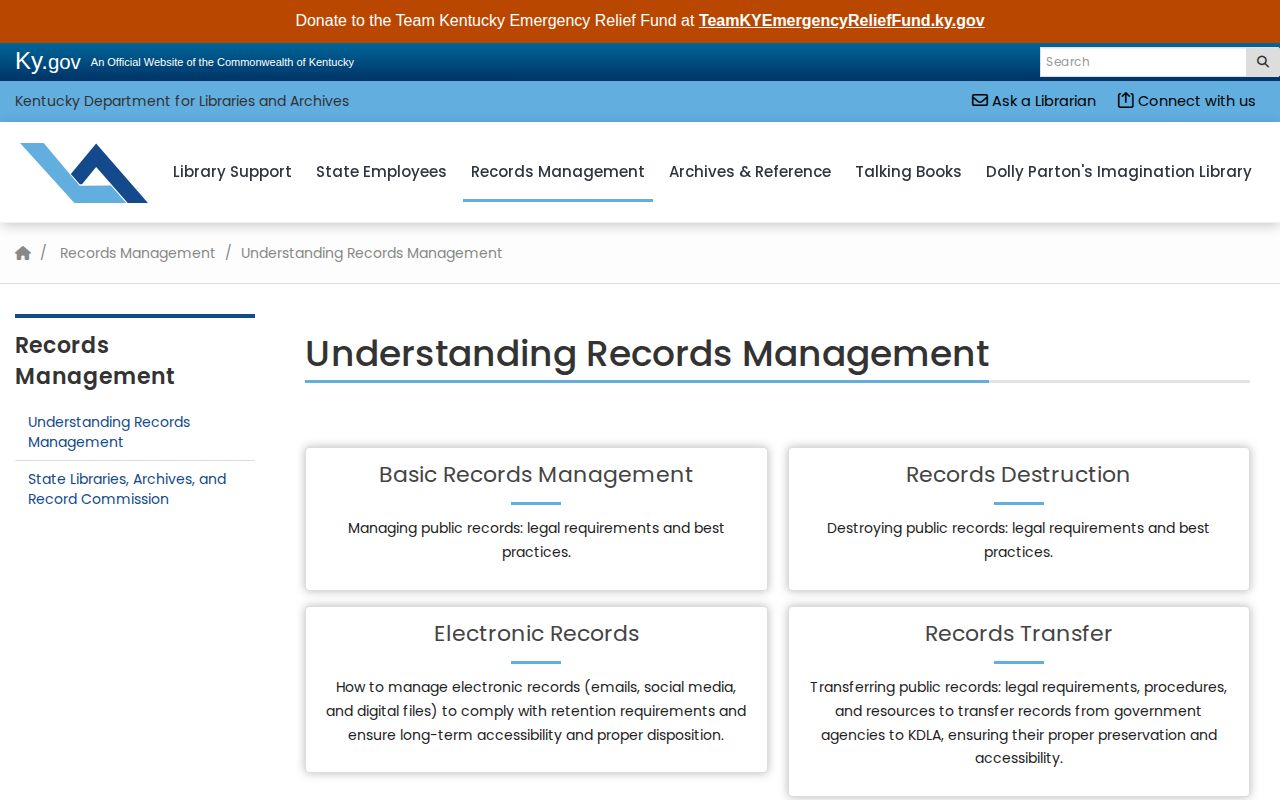
KDLA records-management guidance provides the official archive context for this capture. The county-jailer schedule supplies a second reference, but these schedules are guidance for record series, not proof that a particular Logan image was retained or destroyed.
Old court files and newspaper stories travel yet another route. Kentucky Courts notes that a local case file might stay with the clerk, move to a state records center or the archives department, or be destroyed under a schedule. The Logan public-notice archive is organized by issue. It can surface legal notices and old reporting, but it holds no jail file.
Hunting an old photo takes patience. Start with the jail custodian and ask about the exact series and its transfer history. Then work the county archives, the court clerk, and the newspaper publisher as separate custodians. Each may hold a different piece. A private copy of an image is only a lead; it does not show whether the original still exists in an official file.
Find Logan County Busted Mugshots
The right search depends on where the person is now. Someone currently held at the Logan County Detention Center should appear on the live roster. A released person's booking file may take a formal request instead. A sentenced state prisoner can show up in KOOL. Federal and immigration custody run through their own locators entirely. Choose the tool that matches the custody status, or you'll chase the wrong system.
- Open the county detention page and follow Current Inmates to the official JailTracker client.
- Read bond, charge, and court-date information as current booking data. Note the time of the search.
- If no photo displays, submit a precise request to the jail or relevant law-enforcement custodian.
- Use Guest CourtNet and the Logan clerk to find the later case and disposition.
- Use VINE for release alerts and KOOL only for Kentucky DOC custody or supervision.
- Treat local news and private archives as secondary leads, then verify their claims against an official record.
No verified mobile app serves Logan County booking photos. The sheriff's website and the AccessGov request route are web channels, and JailTracker remains the official live custody client.
Small details matter in these lookups. If the roster lists a court date, carry that date into CourtNet rather than assuming the booked charge never changed. A blank roster can mean many things: a spelling mismatch, a release, a transfer, another county, or a record that is simply not public. Contact the right custodian from there. And skip Kentucky eWarrants for this purpose, since its landing page serves authorized users rather than the public.
The public notice portal is not the only commonly confused source. The Kentucky State Police cases-of-interest page lists investigative cases with a tip option and a county filter, yet it is neither a wanted list nor an arrest roster. Logan County's own Sheriff's Most Wanted page spells out its warrant-check limits and safe ways to resolve one. Keep three questions separate: a warrant, current custody, and a court case each need their own check.
Why Logan County Arrest Records Split
Logan County's records are split by design. The jail, the sheriff, town police departments, the court clerk, and state systems each answer a different question. Guest CourtNet shows public case-index information, while the local clerk holds the actual court file. JailTracker handles current detention. The sheriff's official county page offers no verified public warrant roster, and Kentucky's eWarrants landing page is limited to authorized users.
Match the source to the question. Use the current-inmate roster for present county custody, the arresting agency for its incident record, CourtNet and the clerk for case activity, and the records custodian for an older booking image. A name absent from JailTracker settles nothing about warrants or filed cases or releases. Those are separate checks, and a warrant question belongs with the court, the sheriff, or a lawyer, not an unofficial archive.
Where Logan County Mugshots Appear
Start with official sources. Each one answers a distinct question. Private pages have their uses, since they can point you to a date or an agency label. But they lag, they duplicate entries, and they often stay online long after a release or a court change.
| Channel | Photo status | Use |
|---|---|---|
| Logan JailTracker | Variable; check live | Official current county custody |
| Written county request | Request the held image | Official older or undisplayed booking record |
| Kentucky KOOL | Most profiles, not guaranteed | State prison or supervision, not recent county booking |
| Guest CourtNet and clerk | No general mugshot field | Court case and disposition |
| Local public notices and regional news | Story-specific | Selected reports, sometimes with jail or sheriff attribution |
| Private Logan archives | Often, but unofficial | Recent or historical leads that require verification |
Several private sites carry Logan County sections: BustedNewspaper, RecentlyBooked, Mugshots.com, Arrests.org, and Mugshots.zone. None answer to Sheriff Stephen Stratton, the detention center, or Kentucky courts. A rolling archive can outlast a release, while a missing entry may just reflect lag or a misspelled name. So treat every aggregator result as a lead that still needs official verification.
Local news plays a different role. The News-Democrat & Leader and the Logan public notices are issue driven. WBKO, LEX 18, ClayCoNews, and WNKY pick stories as events develop. Some outlets have run a Logan jail or sheriff image. That shows how an official photo can reach a newsroom even without a stable public roster view. Timing varies too, since a story may follow an investigation or an agency release rather than the booking itself.
Logan County Busted News Photos
Russellville's newspaper route and the Logan public-notice search are the local starting points. Neither is a live booking feed. Both are archives of past issues and articles, so an arrest story shows up only if the paper chose to run one. Publishing schedules also get described differently across directories. Nobody should count on a daily or twice-weekly arrest roundup from these outlets.
Regional television moves faster. WBKO's crime section will carry a Logan story when editors pick it up. LEX 18, ClayCoNews, WNKY, and The Logan Journal add more leads. None follow a set county schedule, though. A photo in a story might come from the jail, the sheriff, an agency press release, or another newsroom. Before relying on anything, confirm it against the official roster, the agency record, and the court file.
Busted and Booked in Logan County
Start at the official detention-center page. Jail staff no longer give inmate information over the phone, so the site points visitors to Current Inmates in the Logan County JailTracker client. That application runs on scripts. A loader message or a temporary error means nothing about the roster itself.
| Live field | Confidence | Reading rule |
|---|---|---|
| Bond | Confirmed by county page | Current booking or release condition, not disposition |
| Charge | Confirmed by county page | Charge entered at booking |
| Court date | Confirmed by county page | Use it to continue in CourtNet |
| Booking ID, agency, or date | May display | Read the live label; do not assume a format |
| Photograph | Unverified as universal | Check live or request it |
Logan County sets no fixed refresh interval for JailTracker. It also states no public persistence period. Intake timing, data entry, release, transfer, vendor lag, and lawful withholding can each change what a search returns. VINE, separately, says it scans jail computers every ten minutes. That figure governs notifications, not the roster's cadence.
Work the live roster in a tight sequence. First confirm the vendor link on the county page. Then open Current Inmates, use only the search controls shown, and note the date of the result. Treat charge, bond, and court date as separate fields. When an image appears, view it at the source rather than copying it. If an image or an older entry is missing, skip ahead to a signed written request. That keeps the source trail clean. It also stops an unofficial directory from masquerading as county policy.
The official page warns against using its public information to injure or harass anyone, and it invites error reports. That local wording counts when an identity is wrong or two people share a name. Give the exact URL or booking reference. Describe the mismatch in plain factual terms and attach only what identifies the correction. The jail can fix its own entry, the clerk controls the later court record, and any private publisher controls its separate copy. The official county screen identifies Current Inmates and the fields promised to the public.
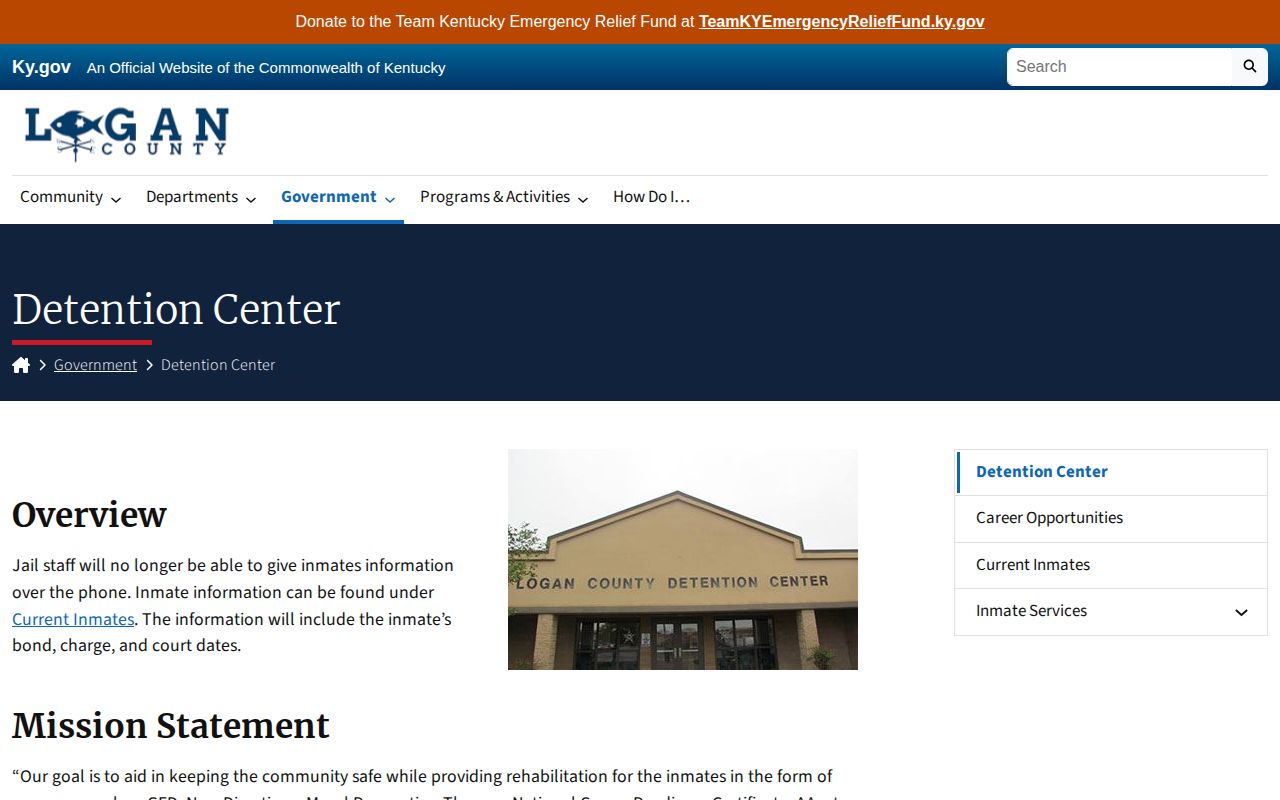
The official landing screen beats a face-filled result grid. It names the source without rehosting anyone's booking photo.
What does a blank Logan County roster photo mean? The public client may simply not display that image. The entry could still be processing, the person may have left current custody, or a lawful restriction could apply. Ask the custodian for the record rather than filling the gap with an unofficial copy.
Note: The roster covers people currently listed in Logan County custody, not every county arrest or any final court result.
Busted Recently in Logan County
Logan County offers no separate official arrest feed for the last 24 hours, 48 hours, 72 hours, or the week. Current Inmates covers the same day only for people still held in county custody. Someone who bonds out quickly, transfers, or was never taken to this jail may never show up in that window.
| Window sought | Verified route | Limit |
|---|---|---|
| Same day | JailTracker Current Inmates | Current custody, not all arrest events |
| 48 hours | No separate official feed | Roster has release and transfer gaps |
| 72 hours or week | Written date-range request | News and private archives are secondary |
| Later outcome | Guest CourtNet and Logan clerk | Court record, not custody or photo feed |
A useful records request asks for adult bookings within exact start and end dates, the arresting agency, charges as entered, bond, release date if maintained, and the booking photograph if needed. This event-history request is different from asking who is in jail now. Weekend volume may affect intake and news timing, but Logan County publishes no weekend feed schedule, so no surge should be assumed.
The public-notice archive and regional crime pages can fill context, not completeness. A news desk chooses which events to report. Unofficial booking pages may copy a name, age, sex, race, arresting agency, booking date, charge code, charge description, bond, or image, but those fields can be transformed, duplicated, or stale. Their omission of a name cannot disprove a booking, and their continued listing cannot prove current custody. For a defined week, a written list request with precise dates is the only documented official fallback. Ask whether the daily arrest list, booking register, or another series is maintained, and request the least amount of personal detail needed.
Note: A date-range booking request asks about past events, while Current Inmates answers only the present custody question.
Kentucky DOC Photos After County Booking
Kentucky runs a second lookup once a person enters the state prison system. The Kentucky Department of Corrections backs a tool called KOOL, and it is filter-heavy. You can narrow by name, alias, DOC number, PID, status, location, demographics, offense, conviction, and projected release. For a Logan County angle, try county of supervision or conviction county. Just remember that a Logan arrest by itself proves neither one.
Photos are part of the picture too. The KOOL FAQ says most offender pictures appear, though none are guaranteed. A small camera icon flags the ones that exist. Fresh institutional images can lag behind processing by days, and the state refreshes pictures at least yearly or after a big appearance change. Profile data updates four times a day. Those timelines are DOC policy, so treat them as state rules rather than promises from the Logan jail.
One more wrinkle deserves attention. KOOL returns supervision records as well, so a hit does not automatically mean someone sits in a state prison. Read the status and location fields side by side. Someone booked in Logan and released without a DOC sentence may never show up here at all. Flip it around, and a person supervised in Logan County might have been convicted somewhere else entirely. Former-offender requests go through the DOC Offender Information Services route in the FAQ. A county booking photograph, though, stays with Logan's records custodian.
Logan County Custody Record States
An empty search result is not proof that nothing happened. A person may have been released, transferred, or booked under a different spelling. The system could be lagging, down, mid-correction, or holding back protected information. Match the source you check to the stage the person is actually in right now.
| Status | Best source | What may remain |
|---|---|---|
| Just booked and held | Logan JailTracker | Current bond, charge, court date, and possibly an image |
| Released or bonded out | Jail or arresting-agency request | Underlying booking and incident records may remain |
| Case in court | Guest CourtNet and circuit clerk | Docket events and later disposition |
| State sentence or supervision | KOOL | DOC profile and often an offender photo |
| Federal custody | BOP locator | Identity, location, or status, not a general public mugshot |
| ICE custody | ICE locator | Limited custody result, not a Logan booking archive |
Federal custody runs on separate tracks with separate limits. The Bureau of Prisons locator covers federal inmates from 1982 forward, searchable by register number or by name with demographic filters. It returns identity, location, and status. No public mugshot field exists there. The U.S. Marshals Service photograph policy flatly withholds prisoner photos along with arrival and departure details. The ICE locator is narrower still. It covers only current or recent immigration custody and demands specific identity information. None of these tools substitutes for a Logan County booking request.
Transfers can make the systems look broken when they are not. The county roster may drop a person after release or transfer, while KOOL, BOP, or ICE later answers a different custody question entirely. Trust the date and agency stamped on each result. Do not stitch separate records into one continuous Logan booking entry without official support.
Note: A transfer can end a county roster entry without ending the underlying court or agency record.
After a Logan County Bust
Court is where the story continues. Arraignment comes first. Charges are read there, and release conditions get set. Bond counts as a release condition. A disposition is the court's eventual outcome, whether dismissal, acquittal, plea, or conviction. The roster's court date field bridges the jail's world into that separate court record system.
Search Guest CourtNet with the Logan County filter applied. For anything important, confirm it through the Logan County Court of Justice. The Administrative Office of the Courts does not keep every local case file. The circuit court clerk remains the local records contact.
- Booking
- Jail intake and record creation.
- Arraignment
- An early court appearance addressing the charge and release.
- Bond
- A release condition set by schedule or a judge.
- Disposition
- The court's result, which may differ from the booked charge.
- Expungement
- A court process affecting eligible records under Kentucky law.
Bond and Release in Logan County
Why does a live roster shift before a case ends? The Logan County bonds page answers that. Some offenses carry pre-set bond amounts. Where none applies, a judge sets bond. The county recognizes four release types: partially secured, release on recognizance, surety, and unsecured. Weekday bond payments run through the courthouse. Cash or surety can be handled at the jail after hours. A person who bonds out also faces a $50 booking fee listed by the county. Release is a custody event, nothing more. The booking file stays put.
The county bond page lays out the local release types and payment route.
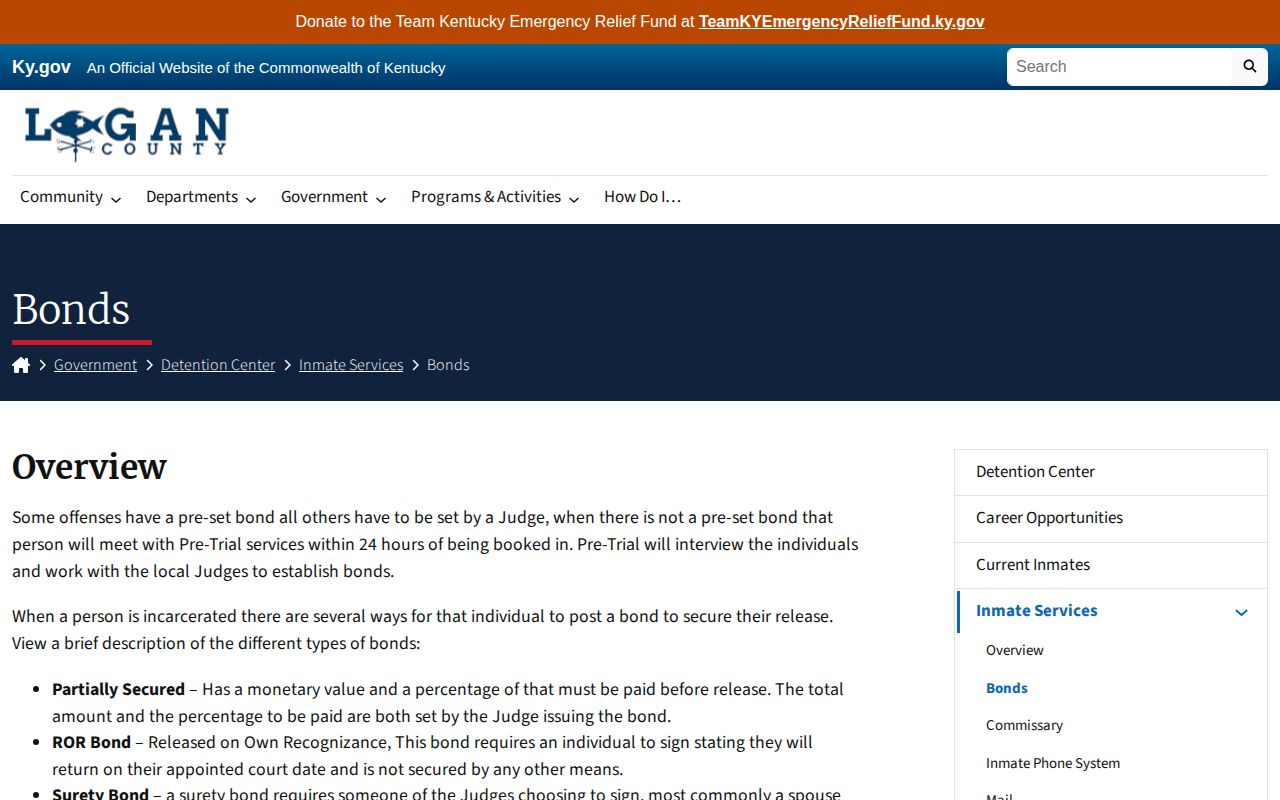
The page explains roster changes well. The final court disposition still lives in a separate system and must be checked there. A few definitions help. Release on recognizance means walking out on a promise to appear rather than a cash payment. A surety bond brings in a party who guarantees the obligation. A partially secured bond requires only the specified secured portion. An unsecured bond demands no money up front under those terms. For any one person, the court or custody record holds the exact order. These definitions describe what the Logan County bond page says. They cannot predict whether a judge will later change conditions.
Logan County Release Alerts
Repeated roster checks get old fast. VINE is built for people who would rather get an alert. The county's VINE information page says the jail computer is scanned every ten minutes. It also lists 800-511-1670 as the number for custody and release notification.
Keep that scan interval in perspective. It belongs to the notification system alone. It says nothing about JailTracker's refresh rate. It offers no mugshot archive and reports nothing from court. When a case outcome matters, follow a VINE release notice with the court record. For a short window, VINE and the roster can even disagree, since they answer related questions through different public interfaces. Save the notification time, recheck the official roster, and use only an office's published contact route when an urgent custody fact must be confirmed. The detention page pushes routine inmate searches online. So an older booking file or photo calls for a records request rather than repeated calls chasing roster history.
The VINE search and notification service shows the custody-focused alert route.
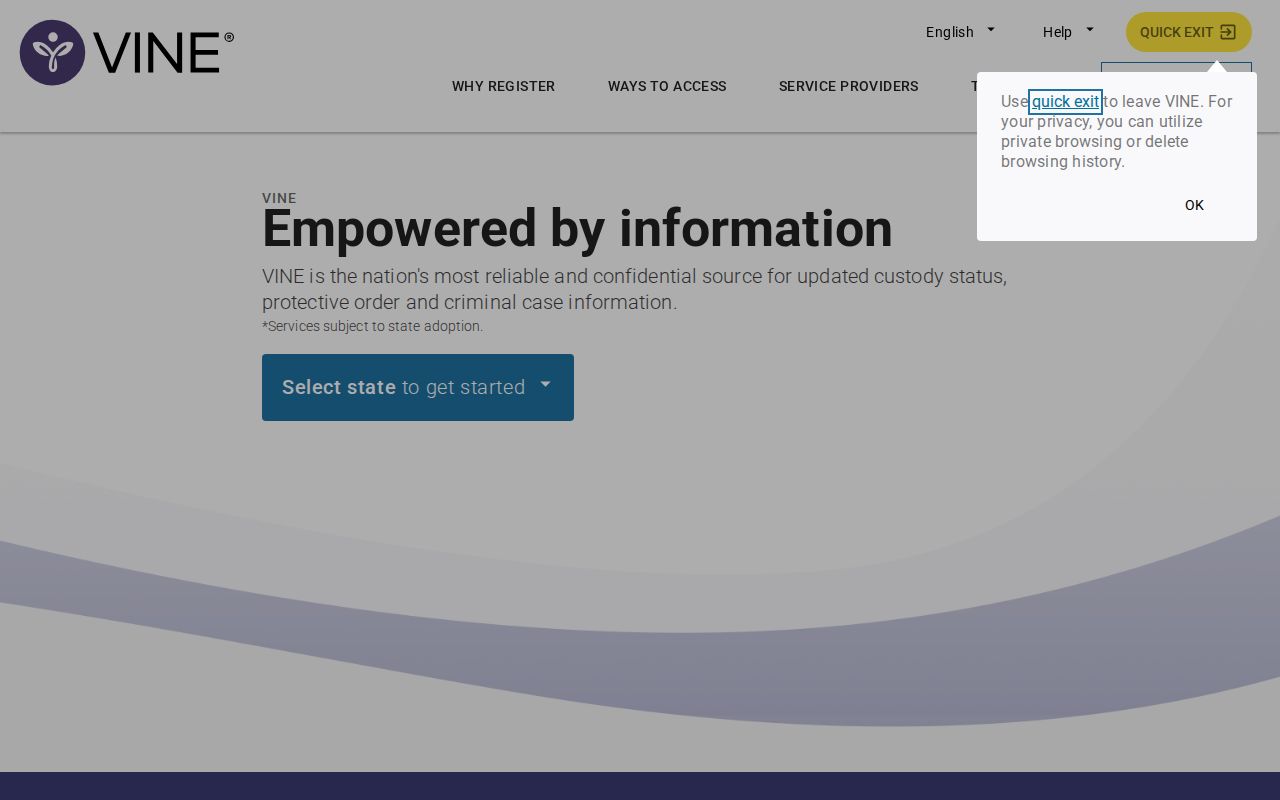
Note: VINE tracks custody notifications, not resolved charges, guilt, or any archive of booking photos.
Busted Mugshots by Logan County City
Three city pages sit below this one. Each is organized around two things: who made the arrest and where the person was booked. None of the city police departments in Logan County run a daily arrest log or a mugshot feed that the public can browse. So each city page pairs the local police record with the Logan County Detention Center, which holds the custody side of every booking.
- Russellville Busted Mugshots covers Russellville Police records and bookings at the detention center in Russellville.
- Auburn Busted Mugshots covers Auburn Police, its city request form, and county-jail booking.
- Adairville Busted Mugshots covers Adairville Police, its records route, and the county roster.
Slow down before you trust a search result. Old Logan County domains and Russellville pages from other states can look right at first glance yet point somewhere else entirely. Always confirm the state, the domain, and the agency behind the page.
Where you start depends on what you need. Want an incident report? Go to the city police. Want to know who is in custody right now? That record lives at the Logan County Detention Center. Russellville being the county seat changes nothing about who owns the file. Its police keep their own reports, and the jail keeps the booking record that follows. In Auburn, the sheriff's office often assists city police, so pay attention to which agency name appears on the record. Adairville has a city police contact but no public blotter anyone has confirmed. When you cannot tell which office made the record, contact both. Give the date, the place, and what you want, and ask which of them created it.
Note: Verify Kentucky, Logan County, and the responsible agency before treating any search result as local.
Verify Logan County Busted Sources
Start with the current Logan County domain to confirm a detention, sheriff, or records link. Pages on the former county domain still turn up in search results. The county itself warns that this older material may go stale. A screen that looks familiar proves little. Check the state, the agency owner, and the role in custody before you rely on anything you find there.
Names can trick you too. The Russellville, Kentucky city site sits beside Russellville pages from other states. A city police record is not a county jail booking. Match the domain to Kentucky first. Then compare what you found against the official detention center, sheriff, court, or city custodian. That habit is what separates a live custody record from a copied busted listing that no longer means anything.
Public Record Search
Sponsored Results